Scritchy Scratchy
Funday Games ApSArcade
4.8756.00 Reviews
- Version
- 1.1.74
- Installs
- 100.00K
- Age Rating
- Teen
Screenshots
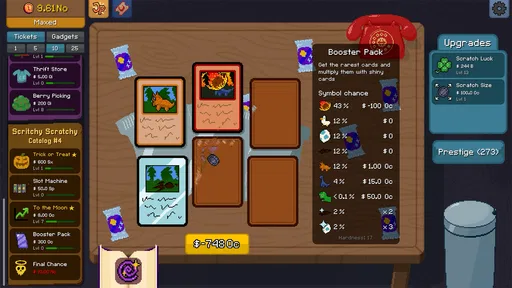
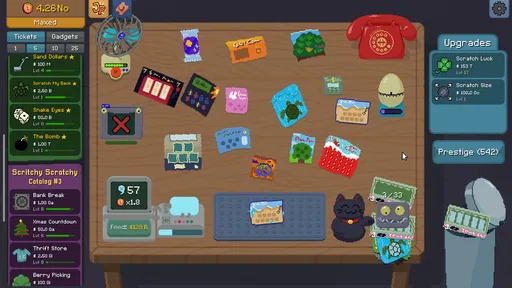
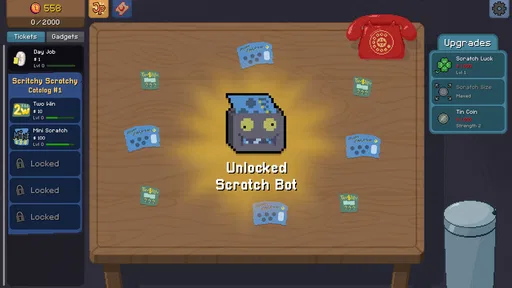
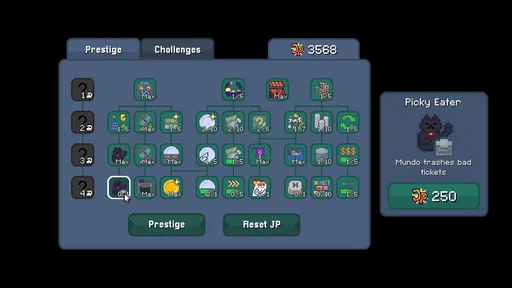
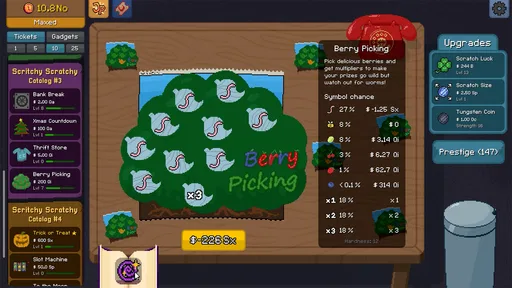
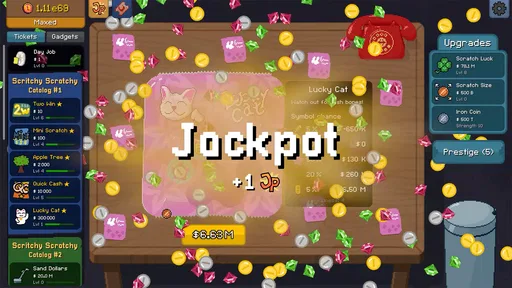
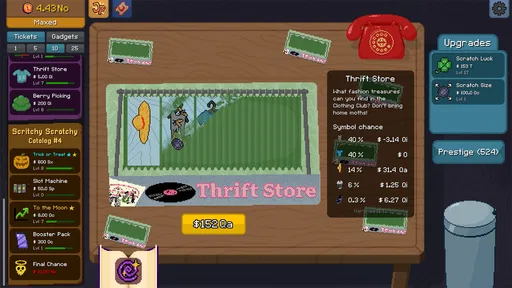
Our Review of Scritchy Scratchy
 Analysis by Appyee
I went into Scritchy Scratchy expecting a quick arcade distraction, and that is exactly where it makes the most sense. The central idea is simple: buy stacks of scratch-off tickets, work through them, unlock auto-scratching, and keep chasing bigger jackpots. It is a deliberately narrow loop, but the appeal comes from how easily a few spare minutes can turn into “just one more stack.”
What makes the game worth discussing is not a huge collection of modes or a complicated story. It is the relationship between progress, anticipation, and spending. Every scratch gives you a small reveal, while the larger rewards keep the session moving forward. I found it easy to understand almost immediately, yet the simplicity also means that your enjoyment depends heavily on whether you like repeated chance-based actions.
How the scratch-off loop feels in everyday play
As an arcade game from Funday Games ApS, this is built around a compact interaction rather than long missions. You are not learning a complex control scheme or memorizing a large map. Instead, the satisfaction comes from opening a batch of tickets and seeing how the results develop. That makes it a natural fit for short breaks, such as waiting for a bus, taking a coffee break, or winding down before bed.
My favorite way to approach it is to treat each session as a small activity with a clear stopping point. I start with a stack, scratch through it, and decide whether the result feels good enough to stop or whether I want to continue toward the next target. That small decision is important because the game can be relaxing when I choose the pace, but more pressuring when I keep playing only because a larger jackpot feels close.
The store summary describes the core progression accurately, but the practical detail is how much the auto-scratching unlock changes the feel of the game. Before that point, the appeal is in the direct action and the reveal. Once automation becomes available, the experience shifts toward managing the flow of tickets and rewards. Players who enjoy active tapping may find that change less exciting, while anyone who sees the scratching as a means to reach the next reward will probably appreciate it.
That creates a useful personal rule: use manual scratching when you want the game to feel like an arcade toy, and rely on automation when repetition starts to feel like work. I would not rush through every ticket automatically, because the reveal is the main personality this game has. At the same time, refusing to use auto-scratching simply to preserve the original loop can make the later part of a session feel unnecessarily slow.
What progress really means here
Progress is less about mastering a difficult skill and more about building momentum. You buy stacks, reveal outcomes, and use the results to pursue larger jackpots. That structure is approachable, but it also means the game may not satisfy players who want their success to come mainly from precision, timing, or strategy. A good result can feel exciting, yet the player’s control over that result is naturally limited by the scratch-off concept.
I think that distinction matters before paying for the game. If you enjoy the suspense of uncertain rewards, the loop has a pleasant rhythm. If you prefer arcade games where practice reliably improves performance, this may feel passive. The best comparison is not a traditional action arcade title; it is a compact reward-chasing experience presented with arcade pacing.
A realistic use case is a short evening session after finishing daily tasks. You can play without needing to remember a storyline or prepare a loadout, and the game’s basic idea is immediately available. It also works for someone who wants a low-pressure game on a phone, provided that “low pressure” refers to controls and learning rather than the temptation to continue spending or chasing the next result.
The Teen content rating is worth keeping in mind for families. I would not hand it to a younger child simply because the controls look easy. The combination of scratch-offs, jackpots, and optional purchases makes it more appropriate for players who can understand that virtual rewards are part of a game and not a way to make real money.
Spending, stacks, and the pressure to continue
The game has a listed price of $6.99, and it also includes optional in-app purchases ranging from $0.49 to $17.99 per item. That combination changes how I judge it. A paid entry point can make the experience feel more substantial than a completely free game, but the additional purchase range means I would set a personal spending boundary before starting rather than making decisions in the middle of a lucky streak.
I see the purchase structure as the most important practical consideration. The game’s appeal is already tied to buying stacks and chasing jackpots, so additional purchases are not separate from the main fantasy; they sit close to the core loop. That does not automatically make the design unfair, but it does mean players should be comfortable with the idea that progress and spending may appear together.
My advice is simple: decide whether the $6.99 purchase is the complete entertainment budget you are willing to give the game. If you later choose to buy an item, treat it as an optional entertainment expense, not as a way to recover an unlucky run. The moment a player starts spending because a previous purchase did not produce the hoped-for result, the loop stops feeling like an arcade diversion and starts feeling like a financial decision.
I would also avoid playing when bored enough to make impulse choices. The game is particularly easy to open for “one quick stack,” and that is exactly when a fixed limit helps. A useful routine is to play only during a planned break, stop when the session ends, and review your spending separately from your in-game results. That keeps a lucky outcome from becoming a reason to raise the limit.
For someone who wants a completely predictable paid game with no extra purchase decisions, this is not the cleanest fit. A premium puzzle game, a conventional arcade title, or a one-time purchase with skill-based progression may be better. On the other hand, players who enjoy the scratch-off theme and understand the optional purchases may find the structure easy to manage.
Is the competition fair?
Scritchy Scratchy does not appeal to me as a competitive game in the usual sense. Its main contest is between the player and the next reward, not between players with different reflexes or equipment. That can be a strength because there is less reason to compare performance directly with someone else. You can enjoy the loop at your own pace rather than feeling that another player’s skill is blocking your progress.
There is still a different kind of fairness question: how much influence does the player have over the outcome, and how closely are purchases connected to attempts? The scratch-off format makes chance central, so I would not evaluate it by the same standard as a precision arcade game. Fairness here is more about whether the experience feels transparent and whether optional spending remains genuinely optional during normal play.
I am careful not to promise more than the game itself establishes. The available description tells me about stacks, auto-scratching, and jackpots, but it does not give me a basis for claiming particular odds, guaranteed reward schedules, player-versus-player rankings, or special protections around purchases. Those are meaningful details for anyone judging fairness, so I would make my decision based on the known structure rather than assuming favorable systems behind it.
That uncertainty does not make the game unusable, but it does affect my trust verdict. I can recommend it as a chance-driven arcade experience, not as a transparent mathematical investment or a skill competition. Players who need clear probabilities and carefully explained reward rules should be more cautious and should look for those explanations inside the game before spending beyond the initial purchase.
Compared with a typical arcade game, this one exchanges mastery for suspense. Compared with a standard scratch-card simulation, it adds a more game-like sense of accumulation through stacks, automation, and jackpot chasing. Neither comparison makes it universally better; it simply shows why the right audience is quite specific. You need to enjoy the reveal itself, not just the idea of winning.
The details I would check before committing
The game runs on Android from version 8.1 onward, which keeps it accessible to many older devices. Its current version is 1.1.74, and the listing shows over one hundred thousand installs. Those details suggest an established mobile release rather than an obscure experiment, while the average rating of 4.8 from around six thousand ratings indicates that the basic concept is landing well with many players.
I still would not use the rating as a substitute for checking whether the loop suits me. High ratings can confirm that the presentation and basic idea work for a broad audience, but they cannot remove the central trade-off between chance and control. Someone may love the quick scratching and still dislike the purchase structure, while another player may find the same structure perfectly comfortable.
The review count is also substantial enough to show that the game has attracted active attention, but I would focus on comments about repeat play, automation, and spending rather than reading only the headline score. Those are the areas most likely to determine whether the experience remains enjoyable after the novelty of the first stacks fades.
One practical tip is to test your tolerance for repetition before buying additional items. Play manually for a while and notice whether the reveal remains entertaining when the results are ordinary. Then try the automated flow and ask whether it improves the experience or merely speeds up a loop you no longer enjoy. That small check can prevent spending to solve a problem that is actually about the game’s core design.
Another useful approach is to separate “progress” from “success.” Reaching another stack or unlocking automation may feel like progress, but it does not necessarily mean the game has become more skillful or more rewarding. If you enjoy collecting milestones, that is fine. If you are waiting for the game to transform into a deeper arcade challenge, you may become disappointed.
I would also recommend keeping the game away from situations where money decisions need to be made quickly. Because the action is fast and the rewards are presented as immediate possibilities, a calm setting is better than a rushed one. This is not a criticism of the scratching mechanic itself; it is a reminder that the mechanic is designed to keep attention on the next reveal.
Who should play it, and who should skip it?
I would recommend it to players who like short mobile sessions, simple controls, jackpot themes, and the anticipation of uncovering results one ticket at a time. It is especially suitable for someone who wants an uncomplicated arcade game that does not demand a long tutorial or a large time commitment. The move from manual scratching to automation also gives the loop a small sense of evolution.
I would be less likely to recommend it to players who want a strong story, deep tactical choices, competitive leaderboards, or a clear relationship between practice and improvement. It is also a poor choice for anyone who finds scratch-card mechanics uncomfortable or who has difficulty keeping optional purchases within a fixed limit. The Teen rating reinforces that this is not something I would frame as a children’s game just because it is easy to operate.
It may also disappoint players who expect a free-to-play experience after seeing optional purchases. The listed purchase price is part of the decision, and the extra items mean the total cost can grow if the player chooses to buy them. I would personally decide whether the base game already offers enough value before treating any additional purchase as worthwhile.
For a friend asking me whether to download it, my answer would depend on what they want from an arcade game. If they say, “I want something quick, tactile, and built around lucky reveals,” I would say it is worth considering. If they say, “I want to improve through skill and beat increasingly difficult challenges,” I would point them toward a more traditional arcade alternative instead.
My trust verdict after weighing the whole loop
The strongest reason to try Scritchy Scratchy is its focused, easy-to-grasp rhythm. It knows what it wants to be: a scratch-off-inspired arcade game where stacks, automation, and jackpots provide the forward pull. I appreciate that it can fit into a small break and that the basic interaction does not require a large mental investment.
The main caution is equally clear. Chance is not a side detail; it is the foundation of the experience. The listed $6.99 price and optional items priced from $0.49 to $17.99 make spending something I would actively manage, especially because the game’s central motivation is always the next reward. I can enjoy that loop responsibly, but I would not recommend approaching it casually if scratch-off mechanics tend to encourage impulsive decisions.
My final view is positive but selective. The 4.8 average and more than one hundred thousand installs show that the concept has found an audience, and I understand why: it is approachable, fast to start, and built around a familiar moment of suspense. Still, I would recommend it as a controlled arcade pastime rather than a deep game or a competitive test. Go in for the scratching and the short-session rhythm, set a spending limit before the first stack, and use auto-scratching when repetition stops being fun.
With those expectations, Scritchy Scratchy can be an enjoyable little diversion. Without them, the narrow loop and purchase pressure may overshadow its simple charm. For me, that makes it a good recommendation for the right friend, but not a universal one.
Verdict
Strengths of Scritchy Scratchy
- Simple controls make it easy to pick up and play.
- Short sessions are ideal for quick breaks.
- Scratch-based gameplay feels tactile and satisfying.
- Lighthearted presentation suits casual players.
- Progression encourages repeated attempts and improvement.
Limitations of Scritchy Scratchy
- Gameplay may feel repetitive after extended play.
- Limited depth may not appeal to experienced gamers.
- Some levels can depend heavily on timing and precision.
- The visual style may feel too basic for some players.
- Replay value could be reduced once objectives are completed.
Similar Picks in This Category
View All
Subway Surfers
SYBO Games4.6

Stickman Party 234 MiniGames
PlayMax Game Studio4.6

Subway Princess Runner
Ivy4.4

Temple Run
Imangi Studios4.2

Zombie Tsunami
Mobigame SAS4.6

Stack Ball - Crash Platforms
CASUAL AZUR GAMES4.5
Frequently Asked Questions
What is Scritchy Scratchy, and how does the game work?
Scritchy Scratchy is a casual scratch-and-reveal style game designed for short, relaxing play sessions. Players interact with the screen by scratching different surfaces or areas to uncover hidden images, objects, rewards, or surprises. The simple controls make it easy to start, although some stages may introduce new patterns, goals, or challenges that require more careful and accurate scratching.
Is Scritchy Scratchy free to download and play?
Scritchy Scratchy can generally be downloaded without an upfront purchase, but the exact payment model may depend on the version available for your Android or iOS device. Some content may include optional in-app purchases, advertisements, or premium features. Before installing, it is worth checking the store listing for current pricing, subscription details, and whether purchases are protected by your device’s parental controls.
Does Scritchy Scratchy require an internet connection?
The basic scratching gameplay may work offline, which is convenient when you want to play during travel or in areas with limited connectivity. However, certain features can require an internet connection, including advertisements, updates, online rewards, analytics, or purchases. Availability may also vary between versions, so users should launch the game once while connected and review its behavior before relying on offline access.
Is Scritchy Scratchy suitable for children?
Scritchy Scratchy is easy to understand and may appeal to children because it uses straightforward touch controls and immediate visual feedback. Nevertheless, parents should check the age rating, advertising content, privacy information, and any in-app purchase options before allowing unsupervised play. If the game includes external links, tracking, or frequent advertisements, parental controls and purchase restrictions are recommended.
What should I check before downloading Scritchy Scratchy?
Before downloading Scritchy Scratchy, check that your device meets the required operating-system version and has enough free storage for the installation and future updates. You should also review recent user feedback, permissions, privacy practices, advertising behavior, and the presence of in-app purchases. Because app features can change through updates, confirming the latest store information is the safest way to avoid surprises after installation.
Play our best games!


